
Mobile Home Moving Checklist: How to Prepare for a Move
Guides · Green Mobile Home Transport · July 11, 2026
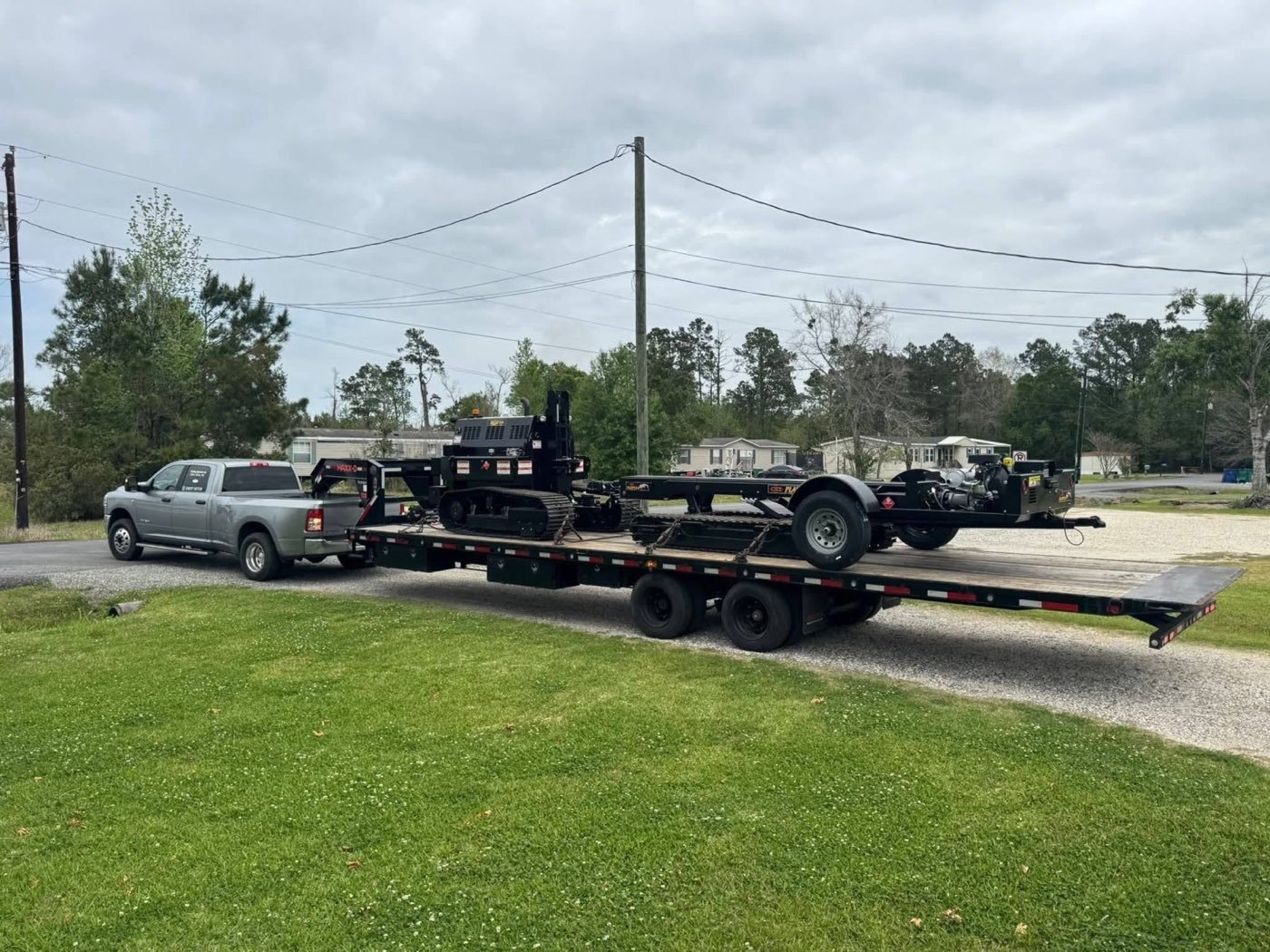
A smooth move is mostly decided before the truck arrives. Almost every delay we see on move day traces back to something that could have been handled weeks earlier — a utility nobody disconnected, a deck nobody removed, a destination site that was not ready. The truck is the easy part.
Here it is in order. Your crew will confirm the specifics, but work through this and you will be ahead of most moves we take on.
1. Six to eight weeks out: decide whether the home should move at all
This belongs first because it is the only item that can save you the entire cost of the move. Some homes should not be moved, and now is the honest time to find out.
Get underneath the home with a light, or have somebody do it. You are looking at the steel: rust gone past surface scale, sag in the main rails, cracked welds at the hitch and outriggers. A frame that will not take the load is the end of the conversation, and no amount of careful hauling fixes it. Check the floor while you are there, too.
Then the paperwork side of the same question. Find the HUD certification label outside each section and the data plate inside, and compare the wind zone on the plate with the zone at the destination, because a home built for a lower zone cannot be installed in a higher one. If the home is going into a community, ask the park about its age policy first; parks are frequently stricter than the county. Can you move an older mobile home covers the 1976 rule, and moving into a community covers what park owners ask for.
2. Four weeks out
Confirm the destination is actually ready
The most overlooked item on the list, and the one that costs most when it goes wrong. Make sure the receiving site can take the home: pad or footings in, approach wide enough, installation approved by whoever has to approve it. If it is going into a park, get their written acceptance now, not later.
Get your paperwork together
Find the title and any lien release, your insurance details, and the tax receipt if your state requires one — some will not issue a moving permit without proof that property taxes on the home are current. If the home is multi-section, check whether each section is separately titled in your state. Many are.
Find the data plate
The data plate is a paper or vinyl sheet inside the home, usually near the electrical panel or in a closet. Photograph it and send it to us. It names three zones, and all three matter:
- Wind zone (I, II or III) — set for where the home was first installed; II and III are the coastal and hurricane-exposed areas. A higher-zone home can go anywhere, but a Zone I home cannot be installed in a Zone II or III area, and the installer must verify that against the data plate (24 CFR 3285.103). This is the one that stops moves.
- Roof load zone — north, middle or south, reflecting design snow load. Worth checking before you move a southern-zone home a long way north.
- Thermal zone (1, 2 or 3) — the insulation the home was built to. It rarely blocks a move, but it decides your heating bill in the new climate.
Crossing a state line? Read moving a mobile home to another state before you book anything.
3. Three weeks out: permits and the site survey
Permits are ours to file, with information that has to come from you: the home’s dimensions — width wall to wall and again over the eaves, length, height on the running gear — the serial number for each section, both addresses, and the title.
Both ends then get a site survey. At the origin: the turn onto the road, overhead lines, tree clearance, whether the ground carries a loaded toter. At the destination: the last fifty feet, which stop more moves than the previous fifty miles. If a site will not take a house, we would rather say so now than find out with the load hooked on.
Permit and escort lead time sets the earliest possible date, not the distance. See permit assistance, how permits and escorts work and what a move costs.
4. Three weeks out: axles, tires and the hitch
A home that has sat on blocks for fifteen years has no roadworthy running gear, and people are consistently surprised by this. Axles, hubs, springs, brakes and tires all have to be fitted or rented, and the hitch may need fabricating if the original is long gone.
How much depends on the home and the states you cross, and the rules are real rather than advisory. Washington requires at least four axles on any housing unit over 14 feet wide, plus brakes that activate if it breaks away from the tow vehicle. Utah works from a table: a 12-foot-wide home up to 60 feet needs two 6,000-pound-rated axles, longer homes three. Some states also set minimum tire size and ply rating, brakes on every axle, and spares carried on the move.
So ask early whether your existing axles and tires can be certified for the route or whether running gear is rented in. It is a real line on the quote either way, and a double wide needs a set per section — see single wide vs double wide.
5. Two weeks out
Book the utility disconnections
Water, electricity, gas and sewer all need disconnecting, and gas and electric usually have to be done by the utility or a licensed technician rather than by you or us. Utilities book out, so call now, and ask for the disconnection a day or two before the move rather than the morning of.
Deal with propane, septic and sewer
A propane tank is the supplier’s property as often as not, and needs collecting rather than moving. The sewer connection has to be disconnected and the riser capped; on septic, the tank needs pumping and the lid marked.
And the destination hook-ups
People remember to disconnect and forget to reconnect. Line up the new site’s connections too.
6. The week before: inside the home
- Pack or remove everything loose — dishes, electronics, anything on a shelf. A home in transit flexes more than people expect, so tape shut any cupboard you have not emptied.
- Take down mirrors, wall hangings and curtains, and pad anything glass that has to stay.
- Secure or remove interior doors so they cannot swing and split a frame.
- Empty and defrost the refrigerator, and empty the water heater and any tanks.
- Remove or firmly secure anything wall-mounted: TVs, shelving, heavy pictures.
- Take down ceiling fans and pendant fixtures — they swing, and the box they hang from is not built for it — and strap the water heater and any loose appliance.
- Close and latch every window, and photograph every room before you leave.
7. The week before: outside the home
- Remove skirting, steps, decks, porches, awnings and carports. They almost never travel with the home.
- Detach anchors and tie-downs, and clear anything stored underneath.
- Cut back branches along the exit route — a home is taller and wider than you are picturing — and flag any low utility line across the path.
- Clear the driveway and approach so the transport truck has room to work, and move vehicles, trailers and equipment well clear of the home and the turn.
- Disconnect and remove the A/C condenser and any add-on structure bolted to the home.
- Cap the sewer riser and water standpipe once the utilities are off, and mark the septic field, tank lid and any buried line on the toter’s route.
- Call 811 before anybody digs at either end — free, and the difference between a footing hole and a struck gas line.
8. Preparing the destination site
The home inherits the quality of what it lands on, and the destination is frequently a separate contractor on a separate bill. The pad or footings need to be in and cured before the date, not on it. Footings go below the local frost line where the county requires it and are sized to the soil that is actually there — generous on compacted gravel is undersized on soft clay. Pier layout follows the home’s installation manual, or the federal Model Manufactured Home Installation Standards (24 CFR Part 3285) where the manual is gone. Grade so water runs away on all four sides.
Then access: approach width and grade, turnaround space for the toter, utility stubs located and marked. Setup and installation and what a proper setup involves have the full sequence.
9. What we handle, and what stays with you
Roughly: anything structural or road-related is ours, anything personal or utility-account related is yours. We take the tear-down and re-set — disconnecting the home from its foundation, removing blocking, fitting hitch and running gear, hauling, then setting, blocking, leveling and anchoring at the far end — plus permits and escorts for every state on the route. What we cannot do is close a utility account, produce a title, or get a park to accept your home.
10. Common mistakes worth avoiding
- Leaving belongings in cupboards — road vibration empties them, and the damage is rarely to the cheap things.
- Assuming the deck comes too — it does not, and dismantling it on move day burns crew hours you pay for.
- Forgetting the destination approach — the last fifty feet stop more moves than the previous fifty miles.
- Booking too late — permits, escorts and seasonal restrictions all need lead time.
- Treating the installation permit as the mover’s problem — the destination has its own approval and inspector, and that is where a move gets stopped after the haul is paid for.
- Assuming the wind zone travels with the home — it does not. The plate is fixed; the destination’s zone is whatever it is.
11. Move day
Keep people and pets clear of the home and the route, make sure someone with authority to decide is reachable at both ends, and have the paperwork on hand. Then let the crew work — the hitch-up and the first hundred feet are where a spotter matters more than an audience.
Once the home is on its pad we level it, block it, re-join the marriage line on a multi-section home and anchor it to code. Ask for the final walkthrough: doors and windows working, the home level, tie-downs torqued, crossovers connected and insulated.
The short version
A move is decided in the weeks before the truck arrives, and what stops it is almost never the haul. It is the destination — a pad that is not cured, a park that has not said yes in writing, an installation permit nobody applied for, a wind zone that does not match. Most of those you settle with phone calls this week. The frame needs somebody underneath the home with a light.
So: photograph the data plate and HUD label on every section. Get the park’s acceptance in writing. Confirm your axles and tires can be certified for the route. Book utilities early and permits earlier. Have the pad cured before the date, not on it. And call 811 before anybody digs at either end.
Send us both addresses, the section count and a photo of the data plate: get a free written quote, see how mobile home transport works, or read what happens after the home lands.