Moving a Home Into a Mobile Home Community: What Park Owners Require
Guides · Green Mobile Home Transport · September 9, 2026
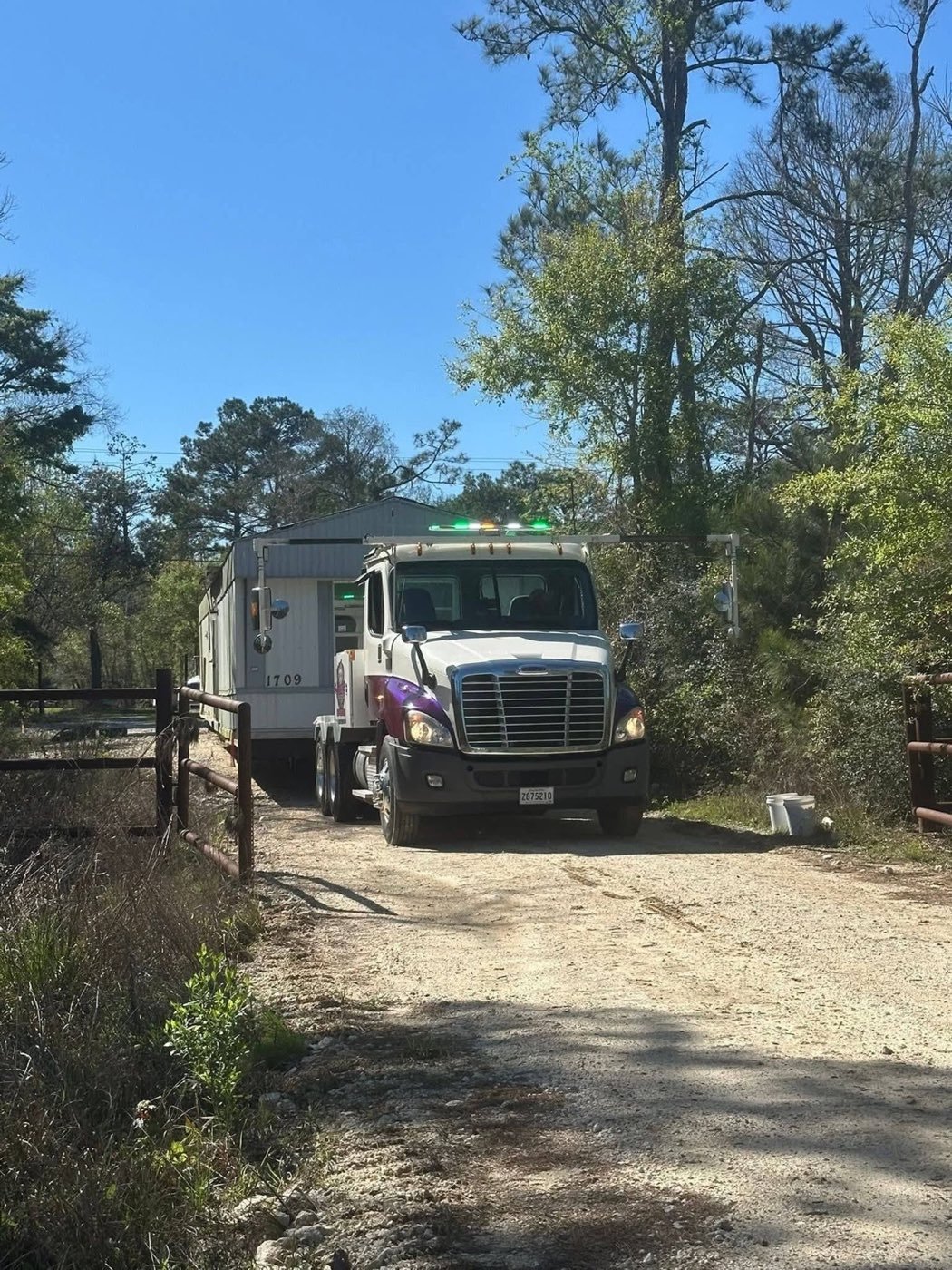
Moving a home onto private land you own is largely a conversation between you, the county and your mover. Moving one into a mobile home community adds a fourth party with a genuine veto, and homeowners are regularly caught out by it. A signed lot lease is not the same thing as permission to bring a home through the gate.
Communities are not being difficult. A toter and a seventy-foot load coming down a private road built for cars can take out a water main, a curb, a mailbox row or somebody else's carport, and the park is the one left holding that bill. So they ask for paperwork first. Here is what they ask for, why, and how to keep it from adding a month to your move.
1. There are two approvals, not one
The first thing to understand is that the community is approving two separate things.
The first is you and your home — your tenancy application and whether the home itself meets the community's standards. The second is your mover — whether the contractor coming onto their property is insured, licensed and contractually on the hook for any damage. These are handled by different people on different timelines, and the second one is the one that gets forgotten until the week of the move.
Ask the community manager for both requirement lists on the same day you first talk to them. It costs you one email and routinely saves two weeks.
2. The community approves the home before it approves you
Most communities have written standards for the homes on their lots, and they apply to a home coming in from outside just as much as to one bought on site. The common ones:
- A maximum age for incoming homes — often somewhere between ten and twenty years, and non-negotiable when it exists
- Condition standards for roof, siding and windows, sometimes assessed from photographs before approval
- Requirements for skirting, and occasionally for its material and color
- Rules about porches, steps, decks and carports — what is allowed, and to what specification
- A size and footprint that actually fits the lot with the required setbacks
Send photographs and the home's dimensions to the community before you buy the home or commit to the lot. A refusal at this stage costs you nothing. A refusal after your home is loaded costs you a return trip.
3. The toter access agreement
This is the document most homeowners have never heard of, and it is the one that actually gets the truck through the gate.
A toter access agreement is a contract between the community owner and the transport company — not between the community and you. In exchange for access to the property, the mover accepts a defined set of obligations: giving advance notice before entering, performing site inspections, handling utility disconnection and capping, pulling the permits, repairing any damage caused to roads, curbs, landscaping, utilities or a neighbor's home, and clearing the site of debris afterwards.
Two clauses in it are worth your attention as the homeowner. The first is that the agreement almost always states that the community is not responsible for paying the mover — you are. The second is that the mover is on the hook for damage, which is precisely why the community will not let an uninsured operator through the gate.
A mover who works with communities regularly will have this document ready and will handle it directly with the management company. A mover who has never seen one is about to learn on your timeline. It is a fair question to ask before you book: have you signed toter access agreements with communities before?
4. Insurance — and the line that gets certificates rejected
Every community will want a certificate of insurance from the mover before the move is scheduled. Coverage levels vary, but a common set of requirements looks like this:
- Commercial general liability — frequently $1,000,000 per occurrence and $2,000,000 aggregate
- Commercial automobile liability — frequently $1,000,000 combined single limit
- Workers' compensation at statutory limits, with employer's liability commonly at $100,000
- Motor truck cargo cover, where the community asks for it
The detail that causes most rejected certificates has nothing to do with the numbers. It is the certificate holder line. Management companies are usually particular about the exact legal entity named, the phrase covering affiliates and subsidiaries, and the specific address it is issued to. A certificate made out to the park's trading name rather than its management company gets bounced, and the reissue costs days.
Get the exact certificate holder wording from the community in writing and pass it straight to your mover. Many communities also require to be named as an additional insured and to receive thirty days' notice of cancellation.
5. The damage deposit
Many communities hold a refundable deposit against damage to the property, released once the move is complete and the site has been inspected. Three questions are worth asking up front, because the answers vary widely: how much, who is expected to post it — you or the mover — and what specifically has to be true before it comes back.
Whoever posts it, make sure the answer is written down somewhere before the day. A deposit that was assumed to be the mover's responsibility and turns out to be yours is an unpleasant surprise on a morning that already has enough going on.
6. Notice, work hours, and the route in
Communities almost always require advance written notice before a toter enters — two business days is a common figure — so that they can inform residents, unlock a gate, or move parked cars off the route.
They will also usually restrict the hours during which the work can happen, and specify which entrance to use. That last point matters more than it sounds. The obvious gate is not always the one that can physically take a seventy-foot load; the turn radius at the main entrance may be impossible while a back service entrance works fine. Whoever is quoting your move should walk or at minimum photograph the actual route in, including the final turn onto the lot and any low branches or utility lines overhead.
7. Call before anybody digs
Anchoring a home means driving anchors into the ground, and in an established community the ground is full of things you do not want to hit — water, sewer, gas, electric and communications, often shallower than they would be on public land and rarely mapped as well as anyone claims.
Utility locates through 811 are free, legally required in most situations, and take a few days to come back. Communities will typically require a locate ticket before any anchoring begins, and they are right to. Hitting a gas line on a private road is a very bad day for everybody.
8. Who pays for what
The usual division surprises people, so it is worth stating plainly. The homeowner pays the mover — transport, permits, setup, and anything the home needs to travel, including wheels and axles if it no longer has them. The community supplies the lot and its connection points. The mover carries the cost of any damage they cause and of clearing the site afterwards.
Where this gets muddy is the lot itself: whether the pad, the utility risers and the connection points are ready and to what standard. Get that in writing from the community before the move date, because a home arriving at a lot that is not ready is an expensive place for a truck to sit.
9. Moving out is where deposits are lost
Everything above applies in reverse when a home leaves a community, and the exit is where people actually lose money.
The site has to be left clear — not just the home gone, but the steps, decks, awnings, skirting, sheds and carports too, along with any block, trash and debris. Utilities have to be properly capped rather than simply cut. Ruts in the lawn, a cracked curb or a damaged curbside mailbox get charged back.
The protection here is simple and almost nobody does it: photograph everything before the move starts, with the community's representative present if they will come out. Pre-existing damage that is documented is pre-existing damage. Undocumented, it becomes yours by default.
10. What this does to your timeline
Community approval runs in parallel with permits, not after them, but it has its own pace — and it depends on people who are not moving at your speed. Tenancy approval, home approval from photographs, the access agreement going back and forth with a management company that may be in another state, and a certificate of insurance being reissued because of the holder line, can comfortably add two to four weeks.
Start it the day you decide on the lot. It is nearly all waiting rather than working, which means it costs nothing to begin early and a great deal to begin late.
Ask the community manager these before you commit
- What is the maximum age and condition standard for an incoming home?
- Do you require a toter access agreement, and can I have a copy now?
- What is the exact certificate holder wording and the required coverage limits?
- Is there a damage deposit, how much, and who posts it?
- How much notice do you need, and what hours may the crew work?
- Which entrance and route should the toter use?
- Is the lot ready — pad, water, sewer, electric — and to what standard?
- Who signs off the site at the end, and what has to be true to release the deposit?
The short version
Communities are not an obstacle so much as a third schedule you have to plan around. The homes that move in smoothly are the ones where somebody asked for the requirements list in week one instead of week five.
We move homes into and out of managed communities regularly, we carry the insurance those communities ask for, and we deal with the access agreement and the management company directly so you are not relaying documents between two parties who both want something slightly different.
Tell us the community and we will find out what they need — request a free quote, or see how transport and setup and installation work together on a community move. If the home is an older one, read what the 1976 rule really means first, since age is the requirement communities bend on least.