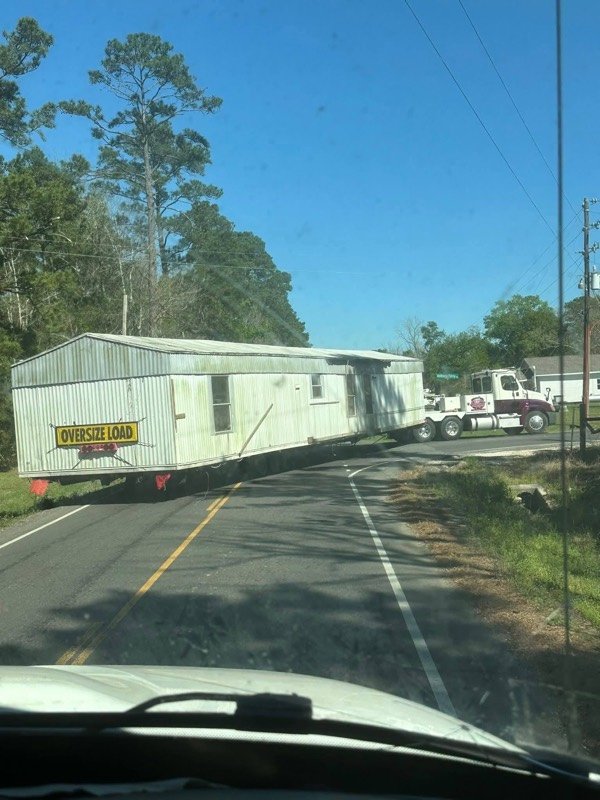
Mobile Home Movers in Michigan — Both Peninsulas
From the Detroit suburbs to Marquette, our Michigan crews move, set and anchor manufactured homes. They also plan around the two things that really govern a move up here: spring weight restrictions and the weather off the lakes.
Michigan is two states pretending to be one, and a mobile home move has to respect that. Downstate you get the Detroit metro, Grand Rapids and the I-96 belt, Lansing, Ann Arbor and Kalamazoo — dense, well mapped, heavily permitted. North of Clare the population thins, the snow deepens, and county roads go seasonal. Then there is the Upper Peninsula, where a wide load may have to cross the Mackinac Bridge to reach the site. Our crews work all of it.
Local Michigan Crews, One National Company
Our people in Michigan are Michigan people, and that matters more here than in most states. Michigan runs a road system where the Michigan Department of Transportation permits state trunklines only, while county road commissions govern everything else — eighty-three counties, each with its own posting practice and its own opinion about spring weight limits. Our agents already know which road commission to call in Otsego County and who answers on a Friday afternoon. They keep their equipment in state and they winterize it. Behind them stands Green Mobile Home Transport of Lucasville, Ohio, licensed and insured to run oversize loads between states, so you deal with one company from quote to final tie-down.
- Frost-law aware scheduling — we read the spring restrictions before we promise you a date.
- MDOT permits filed — trunkline routing, escorts and timing, plus county road commission clearance.
- Upper Peninsula capable — Mackinac Bridge crossings arranged with the Bridge Authority in advance.
- Built for snow country — footings below the local frost line, piers sized for northern roof loads.
- 1,000+ homes moved — licensed, insured, and answerable to you from quote to final tie-down.
Hauling Across Michigan
Routing here is a map problem before it is a truck problem. I-75 runs the spine from Monroe to the bridge and on toward Sault Ste. Marie. I-94 and I-96 carry the southern half. US-131 climbs to Cadillac and Petoskey. US-2 and M-28 are the Upper Peninsula. In between sit lakeshore towns with narrow platted streets and long private drives cut through hardwood. The Mackinac Bridge is its own gate: an oversize crossing is arranged with the Mackinac Bridge Authority ahead of time, wide loads get escorted across, and high wind can close the window until the weather lays down. We build a spare day into every Upper Peninsula delivery.
Main corridors we run in MI: I-75, I-94, I-96, I-69, US-131, US-2 and M-28.
Cities & Towns We Cover in Michigan
We regularly move homes in and around Detroit, Grand Rapids, Warren, Lansing, Ann Arbor and Flint — and everywhere in between. If your origin or destination sits anywhere in MI, we can plan a route to it.
- Mobile home moving in Detroit, MI — Metro parks and infill lots; municipal approvals shape the last mile.
- Mobile home moving in Grand Rapids, MI — Kent County growth off I-96 and US-131, with steady land-home work.
- Mobile home moving in Warren, MI — Macomb County suburbs where narrow park lanes decide the approach.
- Mobile home moving in Lansing, MI — Central Michigan clay that heaves; footing depth is not negotiable.
- Mobile home moving in Ann Arbor, MI — Washtenaw County sites with rolling ground and tight tree clearance.
- Mobile home moving in Flint, MI — Genesee County parks along I-69 and I-75 with older pad layouts.
- Mobile home moving in Kalamazoo, MI — Southwest lake-effect belt; winter dates get built with slack.
- Mobile home moving in Muskegon, MI — Lakeshore sand that drains well but shifts under undersized pads.
- Mobile home moving in Saginaw, MI — Saginaw Valley lakebed clay that pumps water through the spring thaw.
- Mobile home moving in Traverse City, MI — Grand Traverse hills and long wooded private drives to the pad.
- Mobile home moving in Gaylord, MI — Northern lower peninsula snow country with heavy roof load design.
- Mobile home moving in Marquette, MI — Upper Peninsula work off US-41 and M-28, planned around the bridge.
Michigan Permits & Oversize-Load Compliance
Oversize and overweight permits for Michigan highways come from the MDOT transport permits operation, filed electronically with the route, dimensions and equipment listed. What comes back is not simply permission, it is a set of conditions: escort requirements tied to width, daylight-only travel, holiday blackouts, and routing confined to state trunkline. Anything off the trunkline is a separate request to the county road commission or the city. Layered on top are the annual spring weight restrictions, which MDOT sets by measuring frost depth in the roadbed and publishes route by route, with all-season and seasonal routes shown on the state truck operators mapping. We file the permits, read the restrictions and build the schedule around both.
Permit handling is part of the job, not an extra. See what our permit assistance service covers before your MI move.
Setting, Leveling & Anchoring in Michigan
Michigan is HUD Wind Zone I, so uplift is not the design driver here. Frost and snow are. Frost drives deep in this state and deeper the farther north you go, so footings are set below the frost depth the local building department enforces, and that depth is not the same in Monroe County as it is in Chippewa. Roof snow load matters too: the northern counties and the Upper Peninsula sit in a heavier roof load zone than the southern tier, which is worth knowing before you move an older southern-built home north. Soils run from lakeshore sand that drains beautifully to lakebed clay that pumps water every spring. Pads get sized to what is actually under them.
When to Schedule Your Michigan Move
June through early October is the clean window. Late winter into May is frost-law season — restrictions generally start downstate first and lift in the north last — and a state permit does not exempt anyone from a posted road. November through January you are fighting lake-effect snow off Michigan and Superior, which can drop feet on the west side and the Upper Peninsula while Detroit sees almost nothing. Aim for summer, and give a northern move some slack in the schedule.
Complete Mobile Home Services in Michigan
A move isn't finished when the home reaches the lot. Across Michigan we deliver the full package, all in-house:
- Mobile Home Transport in Michigan — Safe and secure transport for single wide, double wide, and sectional homes.
- Setup & Installation in Michigan — We set, level, and secure your home the right way from start to finish.
- Permit Assistance in Michigan — We handle permits and paperwork so you don't have to.
- Leveling in Michigan — Proper leveling for safety, stability, and lasting peace of mind.
- Anchoring & Tie-Downs in Michigan — We anchor your home to meet state and local requirements.
Michigan Mobile Home Moving FAQs
They can delay one. Each spring MDOT imposes seasonal weight restrictions on routes that are not built as all-season roads, and county road commissions post their own local roads on their own timetable. A permit does not override a posted road. We check the current restrictions and the truck operators mapping for your route, and if the ground is not ready we move the date rather than risk the load or the road.
MDOT issues oversize and overweight permits for state trunkline highways only. It does not permit county roads. Since most homes sit at the end of a county road or a city street, we also get clearance from the county road commission or the municipality for that stretch. Splitting the route that way is normal in Michigan, and handling both filings is part of the job we quote.
Yes, and it is a planned move rather than a routine one. An oversize crossing of the Mackinac Bridge is coordinated with the Mackinac Bridge Authority ahead of arrival, wide loads are escorted across, and the crossing can be held if the wind is up. We build slack into the schedule for that, then continue out US-2, US-41 or M-28 to the site.
Michigan sits in HUD Wind Zone I. Roof load is the part people miss: the northern counties and the Upper Peninsula fall in a heavier roof load zone than the southern part of the state. A home designed for a lighter snow load in the south is not automatically appropriate for a northern site. Check the data plate before committing to a move north, and ask us if you are unsure.
Below the frost line the local building department enforces, which varies considerably between the southern tier and the far north. We do not use one default number statewide. Our crew confirms the local requirement, evaluates the soil at the pad, sizes footings and pads accordingly, and rechecks level and anchor torque after the home has been through a freeze and thaw cycle.
Get Your Free Michigan Quote
Tell us the home, the current site and the destination, and our Michigan crew will look at the route, the season and the restrictions before quoting you. The quote costs nothing and comes with a plain explanation of what drives the price. Email is how we work. It puts your details straight in front of the people who would run the job, and nothing gets lost in a phone message.
Moving across a state line? We also cover mobile home transport in Ohio, mobile home transport in Indiana, mobile home transport in Wisconsin, mobile home transport in Illinois, mobile home transport in Alabama and mobile home transport in Alaska, and every other state in the country.
Mobile Home Moving Guides
Expert tips on costs, permits, and preparing your mobile home for a smooth move.