
How Much Does It Cost to Move a Mobile Home? (2026)
Cost Guides · Green Mobile Home Transport · July 11, 2026
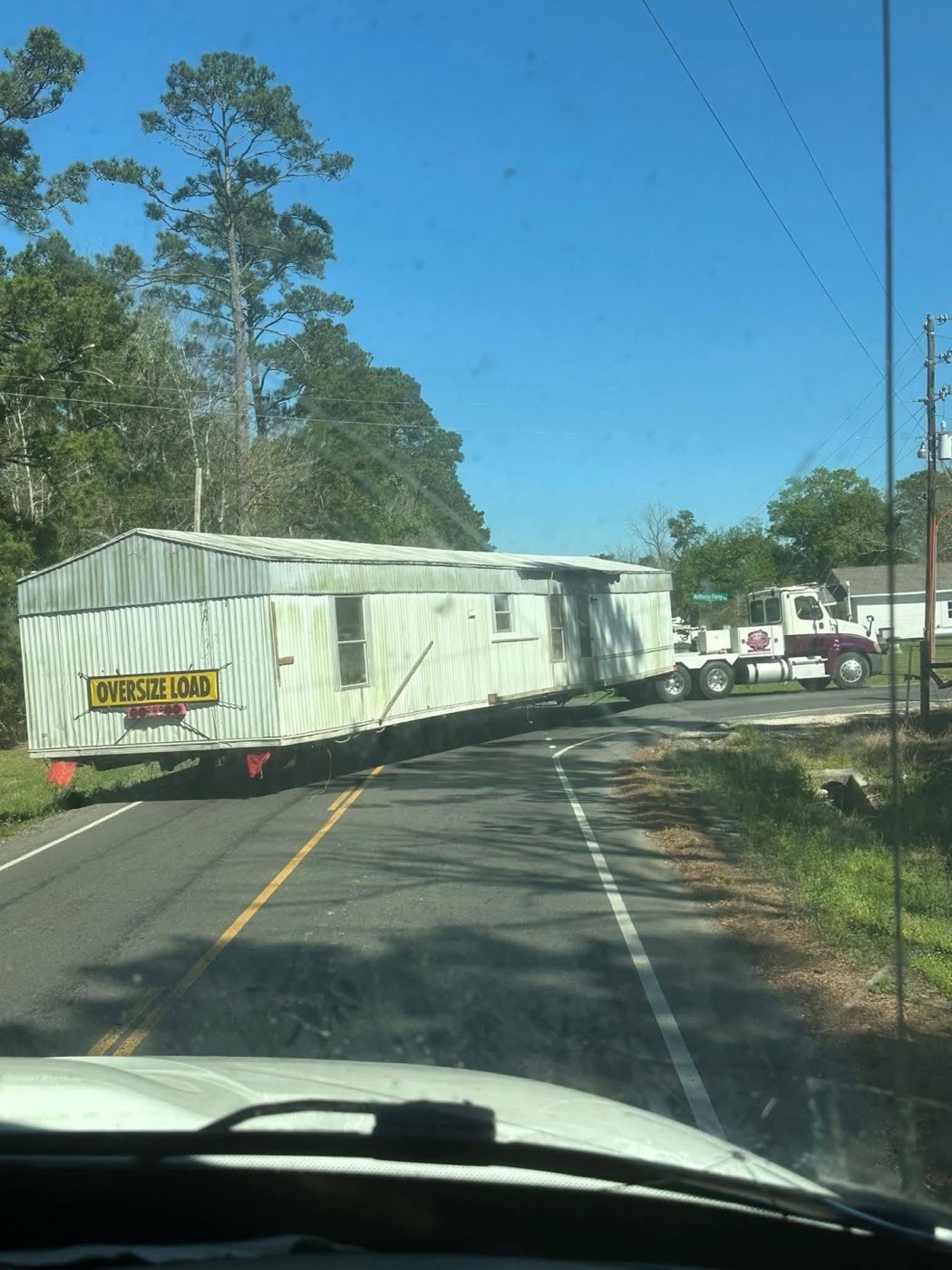
There are two honest answers to “how much does it cost to move a mobile home,” and most pages give you neither. The first is a number, and it is wide: a move in 2026 runs from roughly a thousand dollars to well over twenty thousand. The second decides where in that range you land — whether you are buying a haul or buying a move. Those are different products at different prices, and almost nobody says so before the deposit.
Everything below is an industry range for the United States in 2026, from published cost guides and published permit and escort rate sheets. These are not our prices — we quote per job, because a number produced without your home and your route is a guess, and a guess reappears as a change order. Where a figure is not knowable without looking at the job, we say so instead of inventing one.
1. Transport rates and full-service prices are two different numbers
A transport-only job is hitch, haul, drop. The home comes off its blocks, gets running gear, travels under permit, and is set down at the far end. Everything else — skirting, steps, decks, anchors, utilities, leveling, the marriage line — is yours to arrange and pay for.
A full-service job is the whole sequence: teardown at the origin, permits and escorts, the haul, then setting, blocking, leveling and anchoring at the destination, plus the marriage line and crossovers.
Most prices advertised online are mobile home transport rates, not move prices. A double wide hauled for three thousand dollars is a haul, and the setup left out of it is the half you live inside. So a mobile home transport cost and a full move cost are different numbers, and the question is not “how much” but “how much for what.” See what our transport service includes.
2. What a mobile home move costs in 2026, by size and distance
These are the bands the published 2026 cost guides land in. They disagree with each other by up to a factor of two.
Transport only, local (roughly 60 miles or less)
- Single wide — roughly $1,000 to $3,500. CostHelper puts the floor nearer $700 on a very short haul.
- Double wide — roughly $2,000 to $6,000, because it is two trips.
- Triple wide or larger — roughly $2,600 to $8,000, on the same per-section arithmetic.
Full service, local
- Single wide — roughly $4,000 to $8,000. CostHelper’s $3,000 to $5,000 for disconnect, haul and reconnect at 60 miles is the floor, before anchors and skirting.
- Double wide — roughly $8,000 to $15,000.
- Triple wide — roughly $10,000 to $25,000.
Long haul
Past a few hundred miles it becomes a per-loaded-mile rate: published guides put the towing vehicle at about $4.00 to $5.50 per mile, with each pilot vehicle adding roughly $1.50 to $1.65. A long multi-state move of a multi-section home can clear $25,000 once you add escorts in every state and two permit sets.
A double wide is two moves and a triple is three. Two permit sets, two escort bookings, two trips. That is why the cost to move a double wide mobile home is not “a bit more” than a single wide, and why a quote treating it as one movement should worry you. Mechanics: single wide vs double wide.
3. Distance is the biggest lever on a relocation cost, and it is not linear
A local move is priced as a day: the toter comes out, the crew tears the home down, hauls it, sets it, and goes home. Double the miles on a short move and the price barely shifts, because you pay for the day either way.
Cross a few hundred miles and the model flips: per loaded mile, plus driver hours, plus overnight staging if the permit window will not allow finishing in a day, plus a separate escort booking in every state crossed. Permits are per state, so a four-state route is four filings. Then there is getting the equipment to you — a toter that deadheads three hundred miles empty to reach your lot is three hundred miles somebody pays for, and that is the usual reason a mobile home relocation cost comes back higher than the mileage suggests.
4. Width and section count decide more of the price than square footage
Every mobile home move is an oversize move. Federal rule 23 CFR 658.15 fixes the width limit at 102 inches — 8 feet 6 inches — on the National Network, and the same section explicitly allows states to issue special use permits for manufactured housing that exceeds it. A 14-foot body is already 66 inches over. There is no exemption for “it is my own house.”
What width changes is not whether you need a permit but what the permit demands: wider bodies trigger more escorts, tighter travel windows, and in some states a route survey before anything is approved. Two extra feet can cost materially more over the same route, which is why a 16-foot single wide is not priced like a 14-foot one. Length and weight then drive the running gear and the permit class, and section count drives everything twice over.
5. Permits and escorts: what the paperwork actually costs
The fee itself is usually the cheapest part. Texas charges $40 for a manufactured-housing single-trip permit through the TxDMV, covering one movement, one named origin to one destination, for no more than five days — so a two-section home is two filings before you leave the state. Manufactured housing may not travel on national holidays, and the filer must supply a USDOT number. Across the states these fees mostly sit in the low tens to low hundreds. What costs real money is what the permit attaches to:
- More than one authority per route. A state permit covers state highways. Your county road belongs to the county engineer, a city street to the municipality, and turnpike and bridge authorities permit separately again.
- Escorts, by the day and by the mile. Published rate sheets run about $1.45 to $2.00 per mile for a lead or chase car, more for a high pole, with day rates commonly $450 to $700, plus roughly $75 overnight and $200 for a layover. Some states require a credentialed operator, which costs more and books further out.
- The no-go fee. Escorts booked and not used are still billed, commonly $250 — which is why a weather delay costs money although nothing moved.
See permit assistance, or permits and regulations for who issues what.
6. Axles, tires and running gear — including moving a mobile home without axles
A home that has sat on blocks for twenty years is unlikely to be road-ready underneath. The axles that came under it were rated for delivery, not for a career, and they are routinely pulled and resold after the first set. Tires that have held air in one spot for two decades are not tires you want at highway speed with a house on top. So running gear is a real line item — axles, hubs, springs and tires, fitted or rented, the count scaling with length and weight. We will not quote it blind: the only way to know is to get under there with a light.
If your home has no axles at all — common, and widely assumed to be fatal — it is not a dead end. The usual answer is renting running gear for the trip. On a short private-ground move a home can also travel on a lowboy or be walked with a tracked machine. Both add cost; neither stops the move. What matters is whether the frame will carry the load, which is a different question from whether the wheels are there — see how to prepare your home for a move.
7. Teardown and reset: the half of the bill that is not driving
At the origin: skirting, steps, decks, awnings and carports off, anchors and tie-downs released, blocking removed, utilities disconnected, hitch and running gear fitted. At the destination, all of it in reverse and more: a pad or footings sized to the soil, piers set, the home leveled, anchored to the destination wind zone, the marriage line resealed, crossovers reconnected, skirting and a vapor barrier. On a multi-section home the marriage line and crossovers are a day of work on their own, and the most common thing found wrong on a badly re-set home.
Two warnings. The destination pad or footings is frequently a separate contractor and a separate bill, not always inside a “full-service” number — ask. And skirting is its own project: published 2026 guides put a professional install at $1,500 to $5,000. For scale, a routine re-level runs about $450 to $600 single wide and $750 to $900 double wide — which tells you how much of a first set is labor. See setup and installation and mobile home setup.
8. Utility disconnect and reconnect, which is rarely the mover’s bill
Gas and electric generally have to be disconnected and reconnected by the utility or a licensed technician, not by the transport crew. The charge lands on your account rather than in the move quote, and the work runs on the utility’s calendar. Water, sewer and septic tie-in is the same story.
We will not give you a dollar range here, because the published ones are worthless — they span a few hundred dollars for a reconnect at a serviced lot to five figures for running new service to raw land. Your utility can quote its own fee in one call; raw land needs a separate conversation about service drops, taps and impact fees. Make both calls before you budget, and book the disconnect a day or two ahead of the move.
9. Site conditions, and why nobody should quote your move from a satellite photo
The last fifty feet stop more moves than the previous fifty miles, and the change orders on a bad quote almost all live here.
- Driveway grade and turning radius — a long body needs room to swing, and a crowned or steep approach can rule out a route that looked fine from above.
- Ground bearing — soft ground that holds a pickup will not hold a loaded toter, and wet spring ground is both a schedule and a cost risk.
- Overhead lines — low service drops need a utility crew, on their schedule.
- Culverts and creek crossings — a farm culvert rated for a tractor is not rated for a house. A survey question, not a guess.
Where the ground will not take a wheeled toter, a tracked machine can often walk a home across ground that would otherwise rule the site out. And if a site truly will not take a house, we would rather say so at the survey than find out with the load hooked on.
10. When the move costs more than the home is worth
Sometimes the right answer is not to move it, and you deserve to hear that before paying for a survey. A pre-1976 home with no HUD label can be refused a new installation permit in some jurisdictions, and many communities set an age cap regardless of condition. A frame or floor that fails inspection turns a move into a repair project. A coastward move can land a home in a higher wind zone than it was built for, which changes the anchoring specification and sometimes rules the set out entirely.
So compare against the alternatives. Published 2026 guides put demolition and disposal at roughly $3,000 to $6,000 for a single wide and $5,000 to $10,000 for a double wide. If a full-service move of an older single wide is $7,000 and the home is worth $12,000 where it stands, the math is tight and worth doing on paper. Start with can you move an older mobile home; across a state line, moving to another state covers what resets.
11. How to compare two quotes without being fooled by the lower one
Two numbers are comparable only if the same things are inside them, and the cheapest quote is usually the one with the most excluded. Ask for each of these as its own line:
- Section count, priced per section rather than as one blended figure.
- Site surveys at both ends, named as included or excluded.
- Permits, broken out by authority — state, county, municipal, toll and bridge.
- Escorts by state, showing the day rate, the mileage rate and the no-go fee.
- Axles, tires and hitch — fitted, rented or already present.
- Teardown scope: skirting, steps, decks, awnings, carports, anchors, blocking.
- The destination pad or footings, and whose contract that is.
- Setup scope: blocking, leveling, anchoring, marriage line, crossovers, skirting, vapor barrier.
- Insurance in transit, with the coverage limit written down rather than the word “insured.”
- The mover’s USDOT number, which anyone legitimate hands over unprompted.
The short version
A local full-service single wide realistically sits between four and eight thousand dollars, and a double wide between eight and fifteen. Anything dramatically under that is a transport rate with the setup left out — and the setup is the half you live inside.
Before you price anything: count the sections, measure the width, find the data plate, check what the destination requires for a new installation, and ask any park about its age policy. Then get every quote itemized by the list above, and treat a number that arrives without a site survey as a conversation, not a price.
Send us both locations, the size and a photo of the data plate and we will come back with an itemized number — request a free quote. If the cheapest route is what you are after, read the cheapest way to move a mobile home. Our state service area pages name the permit authority on your route.