
Moving a Mobile Home to Another State: What Changes
Guides · Green Mobile Home Transport · August 26, 2026
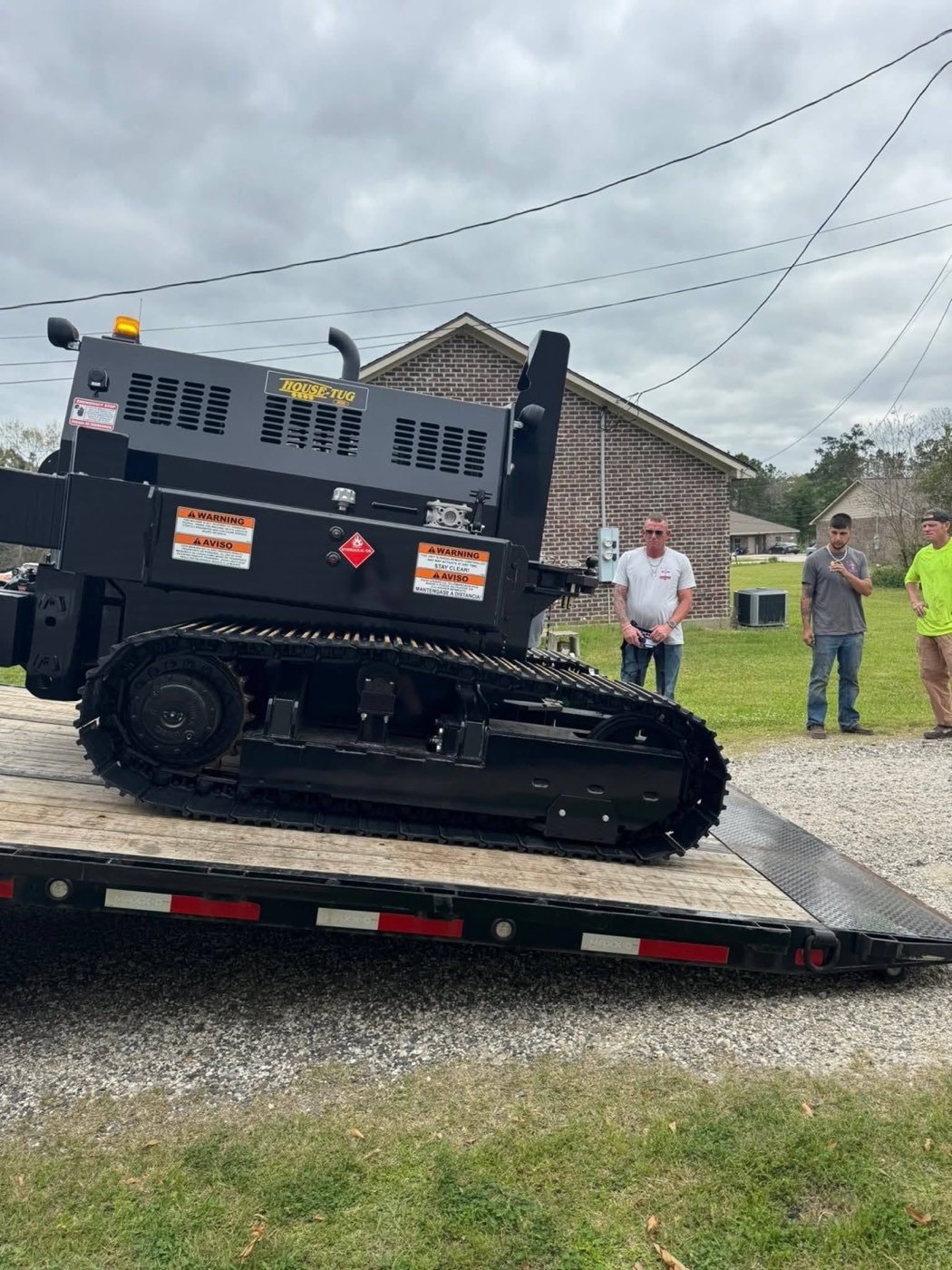
Moving a mobile home across town and moving one across a state line are the same job for the first fifty miles and a different job after that. The truck does not change. The paperwork, the inspector, and sometimes the question of whether your home is legally allowed to sit on the new lot at all — those change the moment you cross the border.
Most of what people want to know about moving a mobile home is the same whether the home travels ten miles or a thousand: what it costs, what has to come off the home first, who issues the permit. If you are at the beginning of this, start with the moving checklist and what a move costs.
This guide is about the part that is only true across a state line, in the order it tends to bite. None of it is a reason not to move your home. All of it is a reason to find out early, because every one of these is cheaper to solve before the home is on wheels.
1. The permit resets at every state line
There is no national oversize-load permit. Each state issues its own, on its own system, with its own route approval, and the conditions attached do not agree with each other. A home going from Kentucky to Georgia needs a Kentucky permit and a Georgia permit, and if the route clips Tennessee, a Tennessee permit too — each one describing the same load, each one approving a different stretch of road.
Who issues what, what the permit controls and what it costs is the whole subject of mobile home moving permits and escorts. What matters on an interstate move is the multiplier: three states is three filings, three sets of conditions and three escort bookings, in an order fixed by the fact that toll and bridge authorities will not issue until the state permit exists. This is the part we absorb for you — permit assistance is part of the quote, not an add-on, and on a multi-state move it is a meaningful share of the work.
2. The wind zone rule that catches people out
This is the one that stops moves, and almost nobody knows about it until a permit gets refused.
Every HUD-code manufactured home is built for a specific wind zone — I, II or III — and it is stamped on the data plate inside the home. The zone is chosen for where the home was first installed. Coastal and hurricane-exposed counties are Zone II or III. Most inland areas are Zone I.
The rule runs one way. A home built to a higher zone can be installed in a lower one: a Zone III home is welcome anywhere. A Zone I home cannot be installed in a Zone II or Zone III area. It was not built to those loads, and the destination will not approve the install.
In practice that means a move inland is nearly always fine, and a move toward the coast needs checking first. A Zone I home from inland Georgia cannot simply be set down in coastal Chatham County. A Zone I home from Tennessee cannot be sited in most of Florida, where there is no Zone I anywhere in the state.
- Moving inland — almost always fine, the home is over-built for the destination
- Moving toward a coast — check the data plate before you commit to anything
- Zone III home — can be installed in any zone in the country
- Zone I home to a Zone II or III county — the install will not be approved
The fix is five minutes of work at the front of the job: find the data plate, read the zone, compare it to the destination county. We do this check before quoting an interstate move, and we would rather tell you no in week one than strand your home on a lot in week six.
3. Roof load and thermal zone move too
The same data plate carries a roof load zone and a thermal zone. These are not enforced the way the wind zone is, but they matter for how the home performs once it lands.
A home built for the South and moved to Minnesota, Maine or the Dakotas was insulated for a different climate and designed for a lighter snow load than its new roof will actually carry. It is not automatically illegal — but you should know it going in, budget for insulation, and expect to keep the roof clear in winter. A northern home moving south has the opposite and much happier problem.
4. Transport and installation are two different licenses
People assume one company hauling the home means one approval. It does not. Most states license the transport through their DOT, highway patrol or motor carrier office, and license the installation through an entirely separate body — a manufactured housing commission, a fire marshal's office, a housing department, or a licensing board, depending on the state.
So the destination state has an opinion about your home even though the home has never been there. It will want the install done by someone licensed in that state, inspected to that state's standard, and often documented with a torque or footing report. This is precisely why we keep our own agents and crews in every state we serve rather than running everything out of Ohio: the crew that sets your home has to be licensed where the home lands, not where our office is.
5. Escorts, curfews and seasons
Three scheduling constraints stack up on a long move, and they compound rather than overlap: escort requirements that change at every state line, daylight-and-weekday travel windows with metro curfews and holiday blackouts, and seasonal postings — northern spring thaw restrictions, mountain wind closures, southern hurricane season. Cross three states and you are threading three sets of each together.
The thresholds, the certified-escort rules and the frost-law calendar are set out in the permits guide. The only thing to carry away for an interstate move is that your calendar is written by the strictest authority on the route, not by the driving time — which is why a 600-mile move is not a day and a half.
6. What this does to your timeline
A local move can often be surveyed, permitted and completed inside a couple of weeks. An interstate move usually cannot, and the delay is almost never the driving — it is waiting on approvals from several agencies that do not coordinate with each other, plus escort availability on a specific day in a specific state.
Book earlier than feels necessary. If your date is flexible, tell us the range rather than a single day; it is often the difference between a straightforward move and an expensive one. And if you are working to a hard deadline — a closing date, a lease ending, a lot that has to be cleared — say so at the quote stage so we can work backward from it.
What to send us for a real quote
An interstate quote is only as good as the information behind it. Five things get you a firm number instead of a vague range:
- Both addresses — origin and destination, not just the towns
- The home's size — single wide, double wide or sectional, and the approximate dimensions
- A photo of the data plate — the wind zone question is answered in one picture
- Photos of both sites — especially the driveway, the last turn and any low lines
- Your timing — a target month beats a fixed day
From that we can tell you what the route looks like, which states are involved, whether the wind zone works, and what the whole thing costs — transport, permits, and setup and installation at the far end, itemized.
The short version
Interstate moves are routine work for us and they are not something to be nervous about. They are simply less forgiving of assumptions than a local move. Check the wind zone, check the destination's installation rules, book earlier than you think you need to, and the rest is logistics we handle.
Start with your state on our service areas map to see how we work there, or send us the details for a free, itemized quote. If you are still deciding whether the home is worth relocating at all, our guide to moving an older mobile home is the better place to start.