
Mobile Home Moving Permits & Regulations Explained
Regulations · Green Mobile Home Transport · July 11, 2026
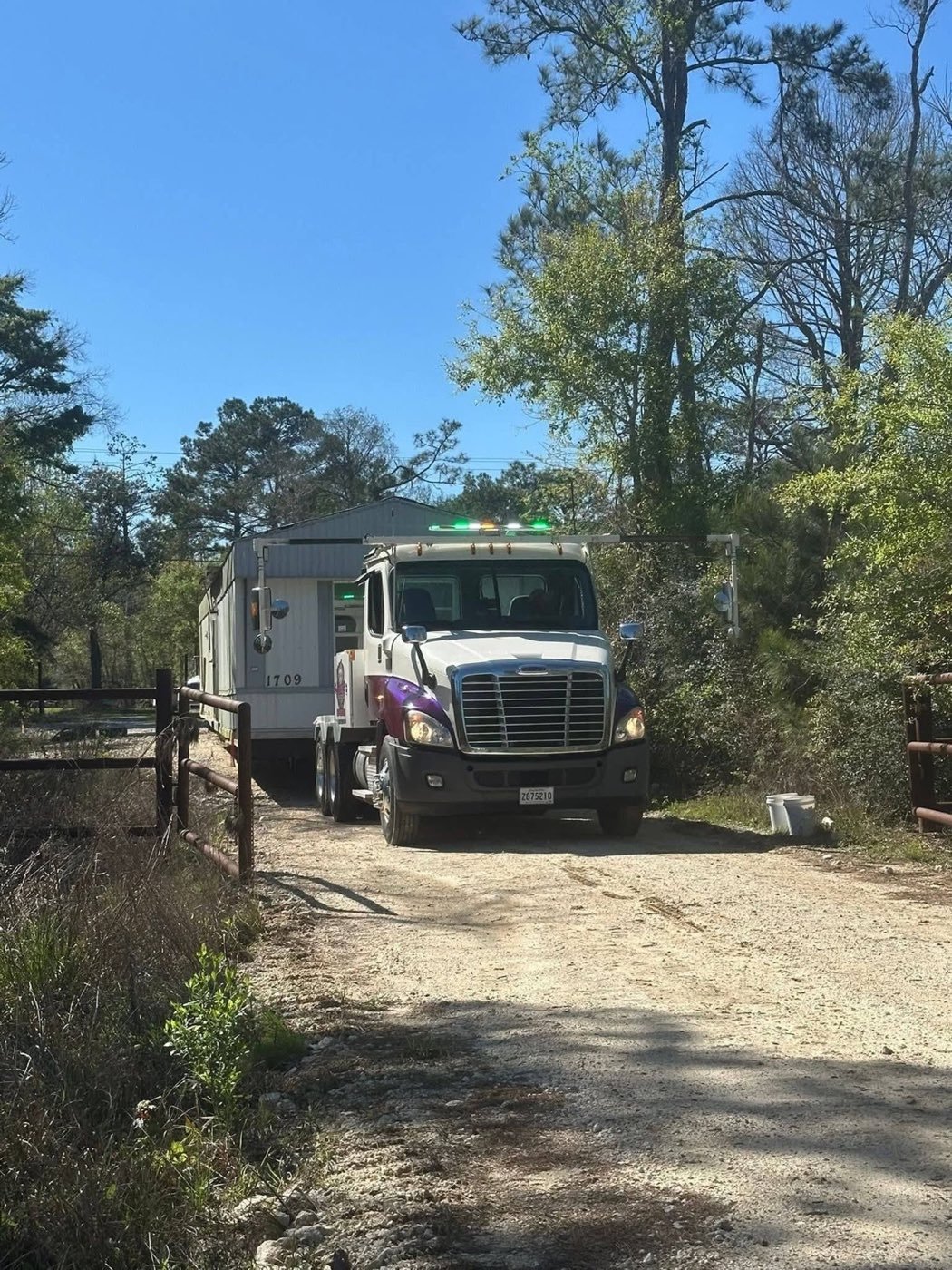
A mobile home is an oversize load, which means it cannot simply be hitched up and driven away. Every move needs permission — usually from several authorities that do not talk to each other, and not always from the office you would expect. Here is how that machinery actually works, without the jargon.
1. Why every mobile home move needs a permit
The threshold is not a judgment call. Under federal rule no state may set the width limit on the National Network at anything other than 102 inches — 8 feet 6 inches — and states issue permits for loads wider than that (23 CFR 658.15, 658.17; Hawaii retains a 108-inch limit by statute). A manufactured home body of 14, 16 or 18 feet is oversize before anybody measures the eaves.
Height and length do the same from another direction: most states treat around 13 feet 6 inches to 14 feet as the point where height needs permitting, and length limits bite on the longer single wides. There is no “it is my own house” exemption and no useful short-distance one.
2. Who issues the permit is not obvious
People assume the state DOT handles it. Often it does, but a surprising number of states put oversize permitting somewhere else entirely, and knowing which office to file with is half the job.
Georgia routes them through the Department of Public Safety rather than GDOT, filed on the GAPROS system. Virginia goes through the DMV and its EZ Haul system, not VDOT. Indiana uses the Department of Revenue’s Motor Carrier Services division under rules set by INDOT. North Dakota does not use its DOT at all — permits come from the Highway Patrol’s Motor Carrier Operations section, which keeps a manufactured housing permit policy of its own.
And it keeps going. Arkansas issues through the Permit Section of the Arkansas Highway Police. Maine calls it an overlimit permit and issues it through the Bureau of Motor Vehicles, as does Vermont. Texas uses the Department of Motor Vehicles rather than TxDOT. California adds a credential test: under Vehicle Code section 35790 a manufactured housing permit goes only to licensed dealers, manufacturers and transporters holding an HCD decal, which is where an out-of-state hauler stalls. Get the office wrong and your application is not rejected so much as ignored.
Our state service area pages name the authority for each state.
3. State, county, city and turnpike are four separate permissions
This answers the question people ask as “how many permits do I need?” As many as there are road authorities on your route.
A state permit almost always covers state-maintained highways only. Iowa says so plainly: the moment the route leaves that system for a county road or city street, that jurisdiction wants its own. The county road your lot sits on belongs to the county engineer, a city street to the municipality, and in Maine and Vermont every town has authority over its own roads.
Then the toll layer. New Jersey alone has the Turnpike Authority, the South Jersey Transportation Authority and the Port Authority for the Hudson crossings, none of which NJDOT covers. New York has the Thruway Authority and, in the five boroughs, NYC DOT. Maryland’s Transportation Authority owns the Bay Bridge and harbor tunnels separately from the State Highway Administration. Most will not issue until the state permit exists, which fixes the order you work in.
And occasionally a state adds a layer nobody expects. South Dakota wants two pieces of paper: the SDDOT movement permit and a separate moving permit from the county treasurer. People routinely forget the second.
4. What the permit actually controls
An oversize permit is not permission to move. It is an approved route with conditions attached, and the conditions are where the real constraints live.
- The route — approved road by road, around low bridges, weight-posted structures and tight interchanges
- When you may travel — typically daylight hours and weekdays only
- Escort requirements — how many pilot vehicles, and whether they must be certified
- Weather limits — high wind stops a wide load, and the permit usually says so explicitly
- Blackout periods — holidays, major events, and metro rush hours
- A route survey — on difficult routes, clearances physically checked and documented before anything is approved
- A validity window — single-trip permits expire, often within days, so paperwork, escorts and truck must line up on one date
That last one is the quiet schedule-wrecker: a permit that expires before the pad is cured is a permit you buy twice.
5. Escorts and pilot vehicles
Past a certain width a pilot vehicle stops being optional. Twelve feet is the most common first threshold, but the brackets and measuring rules are state law, not a national standard.
Maine keeps a separate table for manufactured and modular homes: one pilot vehicle above 12 feet up to 14 feet 6 inches measured at the base, two above that, and police escorts at 16 feet and over. New Hampshire requires one non-police escort from 12 feet and two state police escorts above 14. Utah splits by road class — one pilot above 12 feet on secondary highways but not until 14 on freeways — and counts eaves over 12 inches toward the measured width, which can push a home into the next bracket without changing the house.
What counts as an escort varies too. Some states accept any suitable vehicle with the right signage, lights and flags; others require a certified operator with a specific credential, and those states cost more. Height poles on some routes, law-enforcement escorts on others.
So escorts get booked, per state, for a specific day — one reason a long move needs more lead time than the driving distance suggests. What changes at the border is in moving a mobile home to another state.
6. What a permit costs
Fee structures genuinely differ: a flat single-trip fee in some states, a fee plus a per-mile component in others, blanket permits for carriers who move homes continuously, and separate fees again from county, municipal and turnpike authorities. Escorts bill as a day rate per pilot vehicle, booked per state.
We will not publish a fee table: it would be wrong somewhere within the year, and the authority’s own schedule is the only trustworthy source. What is reliable is the shape — on a multi-state double wide, several permits per jurisdiction times two sections, plus escorts in each state. What a move costs puts that against the rest of the job.
7. Seasonal restrictions catch people out
Northern states post spring load restrictions as the road base thaws, closing a route to heavy loads for weeks. Michigan’s frost law season runs roughly March through May with axle limits cut substantially; Minnesota and Maine run similar March-to-May windows, and the real dates move with the weather. Idaho and Alaska call it spring breakup and post it region by region.
Mountain states close passes and restrict high-profile vehicles in wind — Wyoming and Montana will shut interstates outright. Southern states have hurricane season. And some states write the weather into the permit itself: Nebraska bars travel when the surface is icy, snow-packed or frosted, whatever the calendar says. A move that is routine in September can be impossible in March on the same road, so if your timing is flexible, say so.
8. Travel windows, curfews and blackout dates
The default almost everywhere is daylight hours on weekdays, with metro rush-hour curfews, weekend rules and holiday blackouts on top. Georgia shows how specific this gets: daylight only, and no Sunday travel. Kentucky draws a hard line between a manufactured home permit and a house-move permit, confining house moves to overnight hours and off the interstates and parkways.
Stack three states together and the usable hours are the intersection of three rule sets, not the union — which is why a 600-mile move is not a day and a half of driving. The calendar is set by the strictest authority on the route.
9. The installation permit is a separate thing
This is the distinction most homeowners miss. Permission to haul the home and permission to set it are two approvals from two bodies: transport through a DOT, highway patrol or motor carrier office, installation through a manufactured housing commission, a fire marshal’s office, a housing department or a licensing board.
Behind that sits a federal structure worth knowing. Installation is governed by HUD’s program at 24 CFR Part 3286, which HUD administers directly in any state without its own qualifying program — standards at least as strict as the federal baseline, installer training and licensing, inspections, funding. Either way, somebody licensed certifies the install and somebody inspects it.
So the destination has its own opinion about your home, enforced at installation — frequently an inspection and a documented torque or footing report. It is also where an older home runs into trouble: homes built on or after June 15, 1976 carry a HUD certification label, and some jurisdictions will not permit a new set without one. See can you move an older mobile home.
10. Who is allowed to haul it
The permit is issued to a carrier, which makes the carrier’s credentials part of whether your move is legal. Several states gate manufactured housing permits behind a specific license class — California’s HCD decal is the clearest example, and Kansas writes the mover’s liability insurance into the permit conditions. Ask for the following.
- Operating authority and USDOT number — and that it covers the states on your route
- Manufactured housing transporter licensing — where the state licenses it separately from general oversize hauling
- Cargo and transit insurance — the certificate with the limit, not a verbal assurance
- Installer licensing in the destination state — the crew setting the home has to be licensed where the home lands, not where the office is
- Who files the permits — and whether fees and escorts are in the quoted price or billed later
A legitimate mover will not mind being asked. One that does has told you something.
11. What happens if you skip it
Moving an oversize load without a permit is not a paperwork oversight. It exposes you to fines and to having the load stopped mid-route, which is expensive and awkward when the thing stopped is your house, and it can leave you personally liable if the home strikes a bridge or a line. The quieter risk is at the far end: an install with no permit and no inspection is an install with no record, and that record is what a lender, an insurer or a buyer asks for later.
12. How we handle it
Permits are part of the quote, not a line you discover later. We identify every authority on the route, file with each, arrange escorts where required, and schedule around the travel windows and seasonal restrictions. Because we keep our own crews in each state, the person filing your paperwork usually deals with that office every week — see permit assistance, or how the haul works on mobile home transport.
The short version
There is no such thing as a no-permit mobile home move, and the office you need is frequently not the state DOT — it is a highway patrol, a DMV, a revenue department, a county treasurer or a turnpike authority, and often several for one route. The permit is not permission to drive: it is a route with conditions, a validity window and an escort requirement attached.
So: find out which authority owns every road on the route, including the last mile. Measure the width over the eaves, because that sets the escort bracket. Book escorts per state. Check the destination’s installation rules and the HUD label before the haul, not after. And line the permit validity up with the date the pad is ready.
Or hand it over: we pull the permits and book the escorts, send us your route for a free quote, and read moving a mobile home to another state for what changes at the border.